A quay works in one of the harshest environments in construction — at the meeting point of water, soil and service loads. Corrosion, scour, earth pressure and the mooring of vessels gradually weaken the structure, and the damage often develops underwater, invisible from the deck. Quay renovation carried out in time costs a fraction of rebuilding after a failure. We explain how to spot the problem, which technologies come into play and when renovation is no longer enough.
Why a quay deteriorates
A quay structure (most often a sheet pile wall with a capping beam, or a retaining structure, sometimes on piles) is permanently loaded by earth and water pressure and by the action of vessels. The most common causes of degradation are steel corrosion in the tidal/splash zone, washout of soil behind the wall (cavities), damage to the capping beam and fenders, loss of anchoring, and scouring of the bed at the foot of the structure.
Typical damage
- Corrosion and perforation of the wall — especially in the zone of variable water level.
- Soil washout behind the wall — voids and sinkholes behind the quay, dangerous for traffic on the deck.
- Cracks and losses in the capping beam — the reinforced-concrete crowning beam.
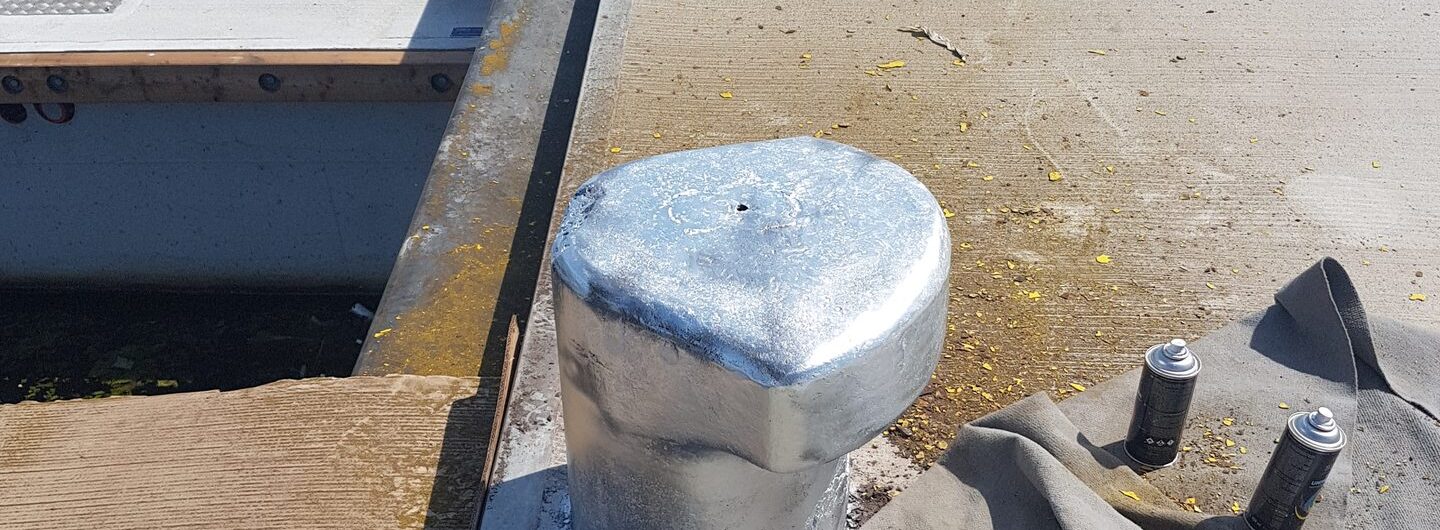
- Damaged fenders, bollards, ladders — equipment elements.
- Bed scour and loss of stability — the most serious case, requiring a rapid response.
Diagnostics — where we start
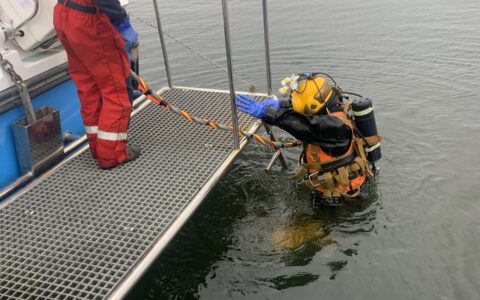
A sound renovation starts with assessment, not with a cost estimate. The evaluation covers a structural inventory, geometry and deflection measurements, steel thickness testing, ground sounding and — crucially — an underwater inspection of the submerged part and the bed. Only a full picture of the damage (including what lies below the waterline) allows the right technology to be chosen and renovation to be distinguished from necessary reconstruction.
Renovation technologies
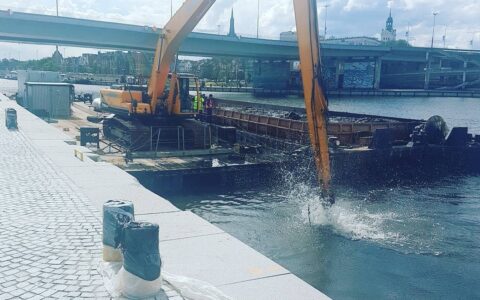
- A new sheet pile wall — a wall added on the water side, or replacement over the damaged section.
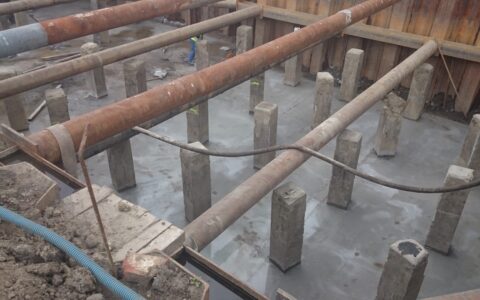
- Repair and reconstruction of the capping beam — restoring the reinforced-concrete crowning beam.
- Sealing and soil replenishment — eliminating cavities behind the wall (grouting, backfill).
- Underwater works — repairs, concreting and welding of the submerged part without dewatering (see underwater works).
- Equipment replacement — fenders, bollards, ladders, lighting.
- Bed protection — rock armour or mattresses at the foot, to stop scour.
Renovation or reconstruction — where the line runs
If the structure retains its load capacity and the damage is local, renovation is enough. Where the wall has lost stability, corrosion is advanced along its whole length, and service parameters are to increase (larger vessels, heavier equipment on the deck), a reconstruction with a new structure makes more sense. The decision rests on diagnostics and a whole-life cost calculation, not on the price of the first stage alone.
Permits
Works on a quay are carried out in water and its range, so they usually require a water-law consent. But not always the “full” one — part of the tasks, especially repairs and like-for-like restoration, can be carried out on a water-law notification, without a permit. Larger interventions (reconstruction, change of parameters, new elements) require a water-law permit, and on navigable waters additional arrangements with the maritime or inland-waterway authority. Which route to take is decided case by case — best in parallel with the design.
FAQ
Can a quay be renovated without dewatering?
Yes — a large part of the repairs to the submerged section is carried out by underwater methods, without building a cofferdam or pumping out.
How do you tell a quay needs renovation?
Warning signs are sinkholes and voids in the deck, wall deflection, traces of corrosion and perforation, and a damaged capping beam. Certainty comes only from diagnostics with an underwater inspection.
Do you have a quay that needs assessment or repair? We will carry out the diagnostics (including underwater), select the technology and run the works — from documentation to supervision and management. Get in touch.