Water works on the bank constantly. It undercuts it, erodes it, takes the ground centimetre by centimetre, and during high water it can change the shoreline overnight. Riverbank protection (bank reinforcement) is the engineering answer to this process — a set of solutions protecting the ground from the destructive action of the current, wave action and ice. We explain which methods are used today, when protection is necessary, what formalities it requires and how to choose a solution that will last for years, not a single season.
What riverbank protection is
Bank protection (bank reinforcement) means structures and safeguards that stabilise the shoreline of rivers, lakes, canals and port basins. Their task is to halt erosion, protect slopes from undercutting and secure the land and infrastructure adjacent to the water. They often also serve a functional purpose — enabling mooring, access to the water or the carrying out of other hydrotechnical works.
The range of solutions is wide: from “soft” biological safeguards, through riprap and gabions, to heavy retaining structures and sheet piling used at quays.
When bank protection is necessary
The most common situations in which it is not worth waiting:
- Progressing erosion — the slope is sliding, the bank is retreating towards buildings, a road or a field.
- Proximity of infrastructure — a bridge, culvert, pipeline, road or building within the reach of the water.
- Investments at the land–water interface — construction or refurbishment of a quay, slipway, marina or jetty.
- Flood protection — securing banks and embankments on stretches exposed to high water.
- A change in the use of the body of water — e.g. admitting vessel traffic that increases wave action.
The sooner you react, the cheaper it is. Advanced erosion means not only a larger scope of works, but also rebuilding the lost ground and repairing what the water has already damaged.
Methods of bank reinforcement
The choice of method depends on the type of water body, the gradient, the current velocity, wave action, the ground-water conditions and the function of the bank. They are most often used in combination.
Natural (biological) safeguards
- Planting the slope with vegetation that has a strong root system
- Fascine, fascine rolls and sausages
- Bio-geotextiles and anti-erosion mats
- Turfing and seeding of slopes
They work well with a gentle current and little wave action. Advantages: low cost and natural, landscape value. Disadvantage: limited resistance to high hydraulic loads.
Technical (hard) safeguards
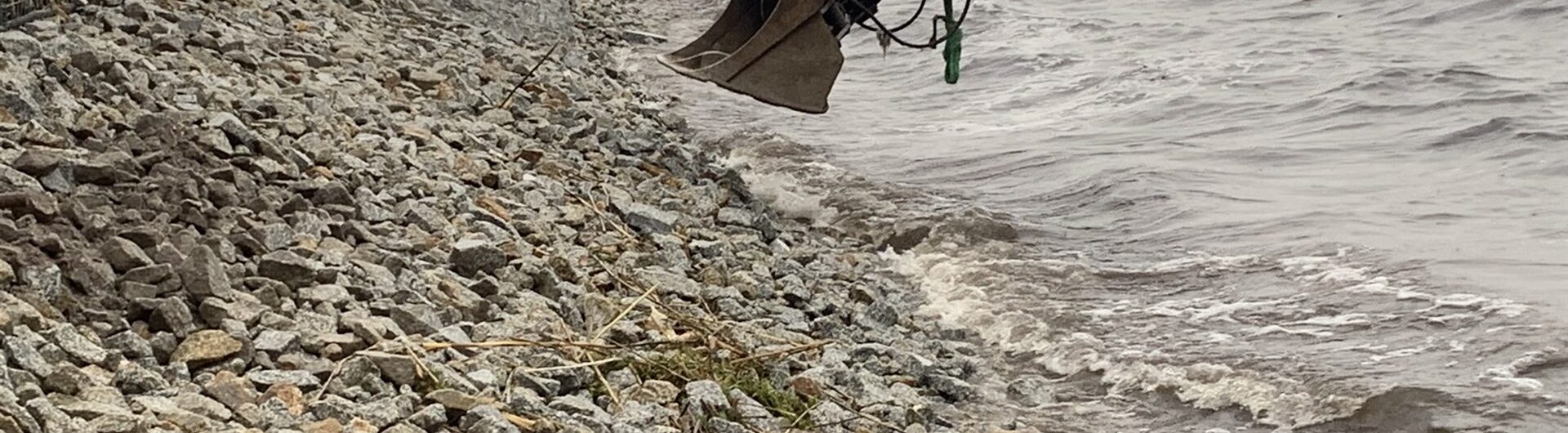
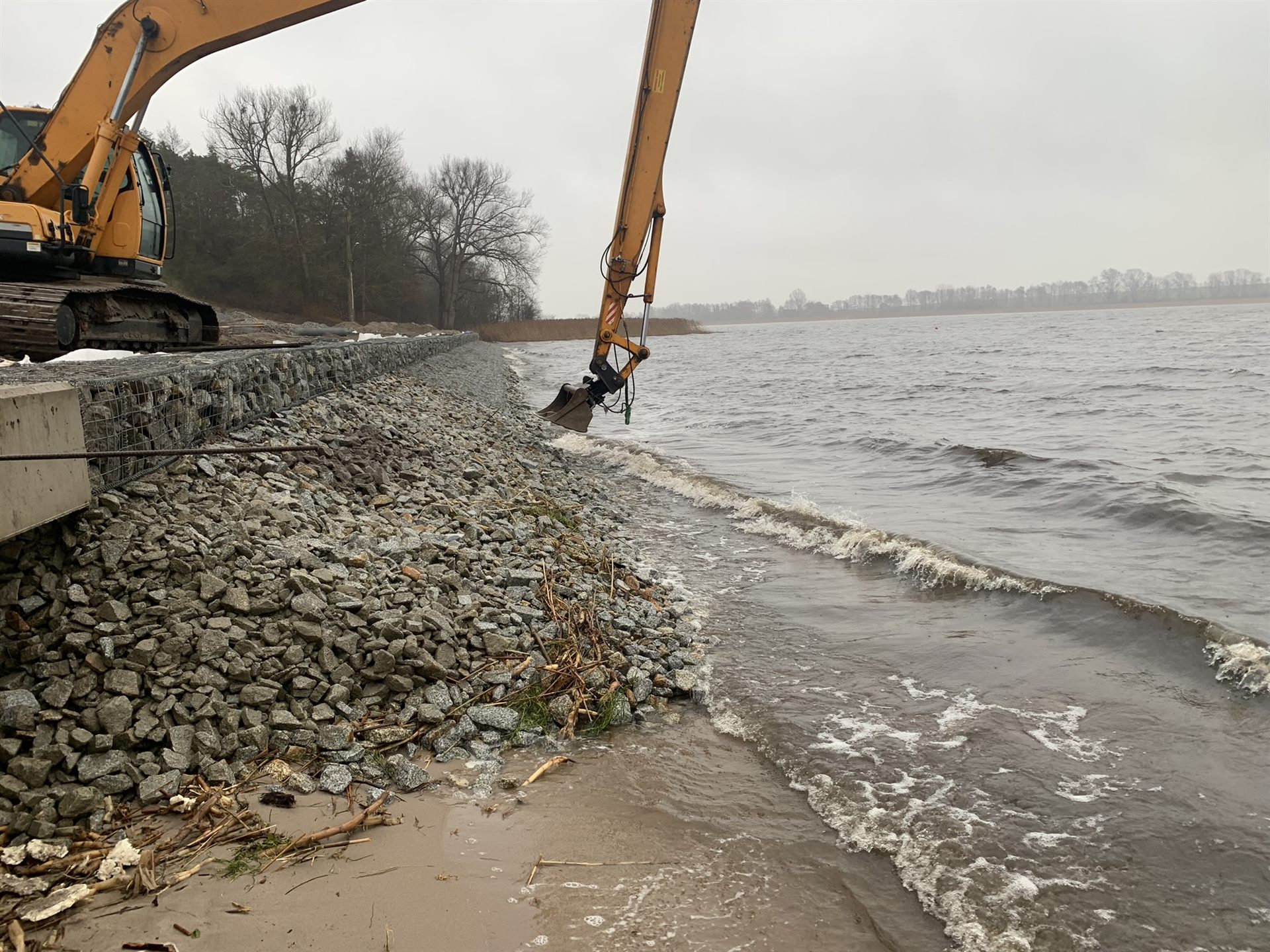
- Riprap — loose or placed riprap of crushed stone; the most popular and very durable solution under medium and high loads.
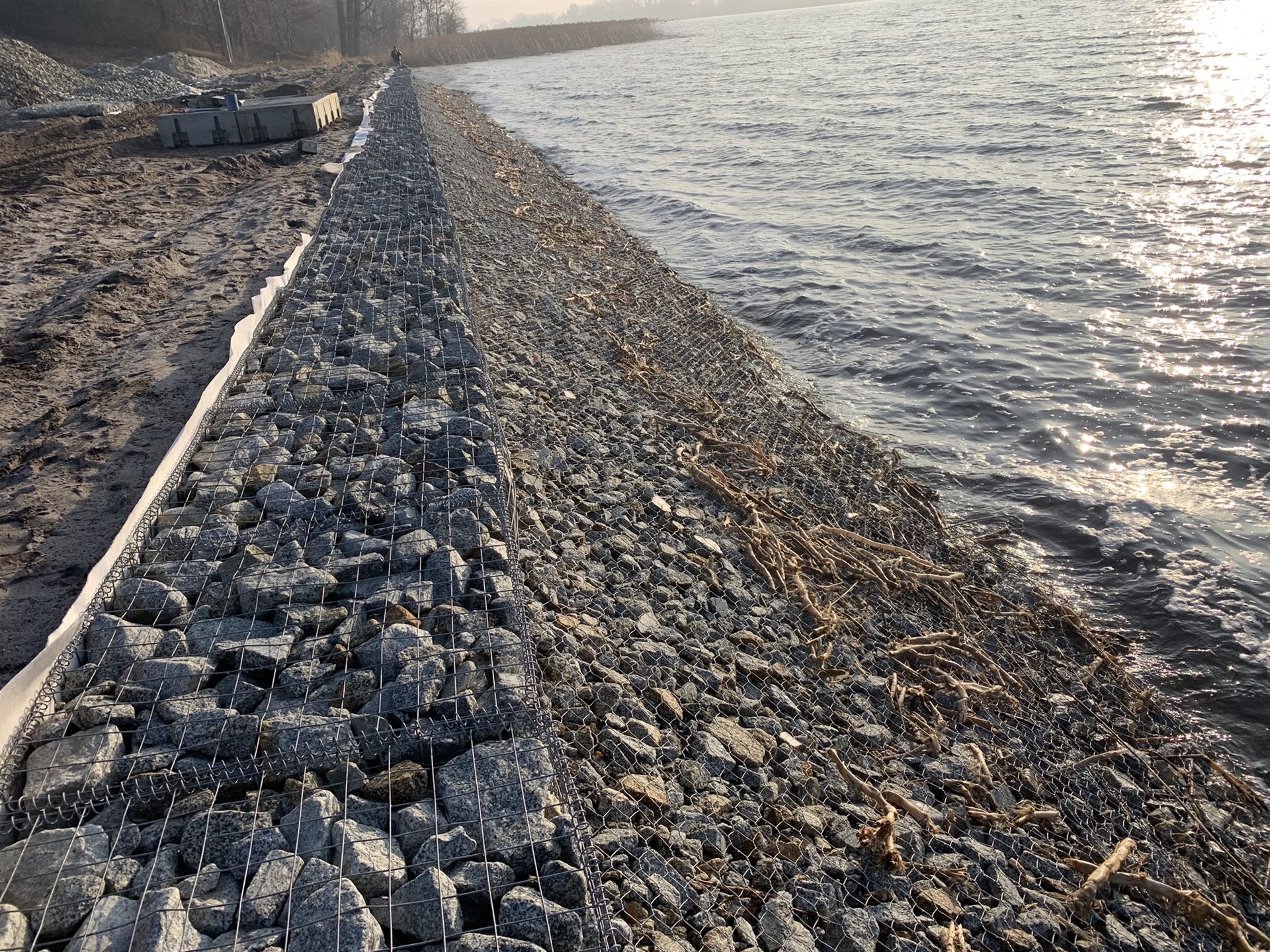
- Gabions — wire baskets filled with stone; flexible, permeable, working well on uneven ground.
- Gabion mattresses and geomats — thin layers protecting the bed and the lower part of the slope from washout.
- Sheet piling (steel, vinyl, reinforced concrete) — at quays, canals and wherever a vertical, retaining bank is needed.
- Concrete slabs and precast units, bank revetments — on stretches exposed to intense wave action.
Hybrid solutions
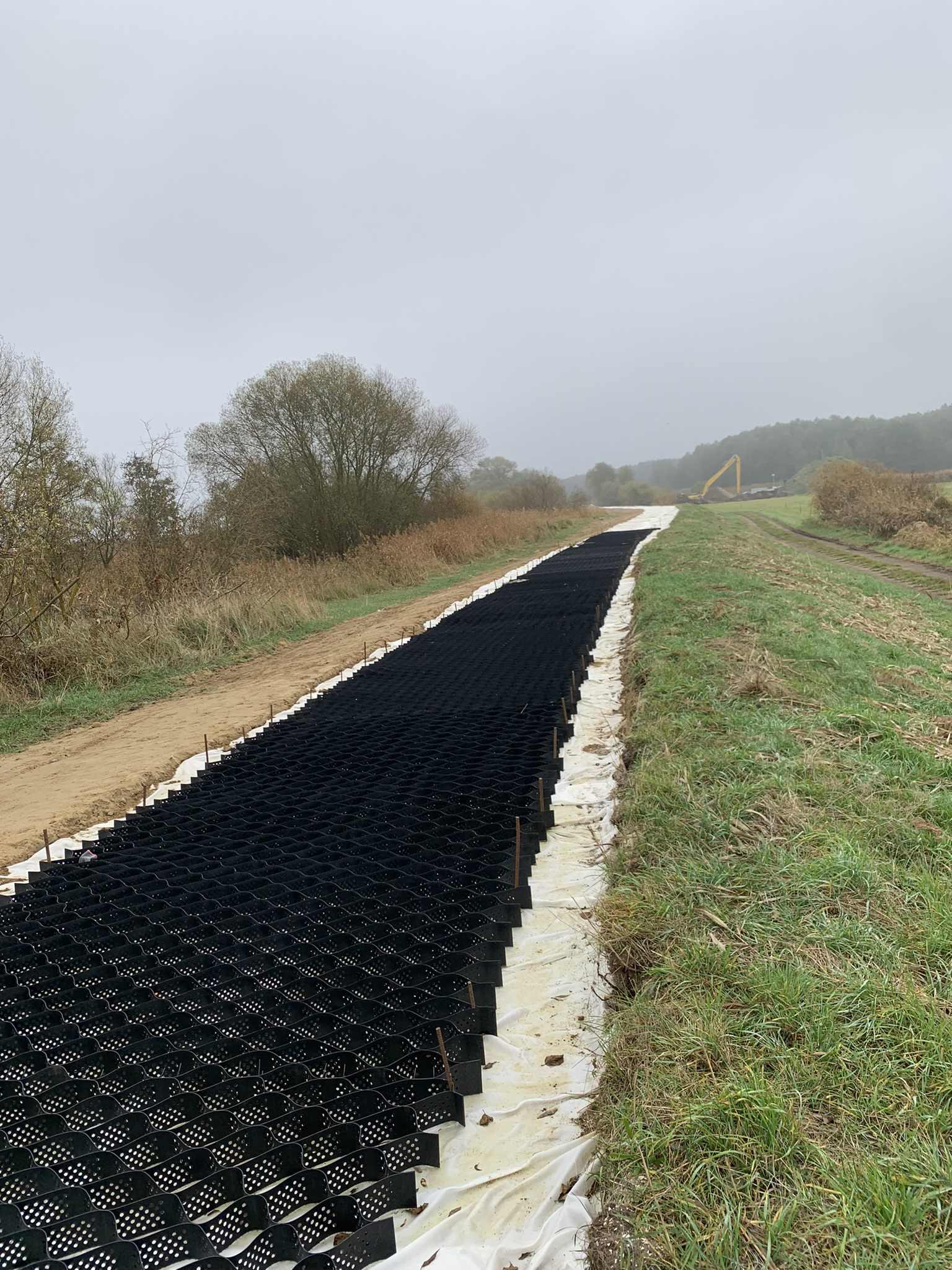
The most durable results come from combining a technical structure in the most heavily loaded zone (at the water line) with a biological safeguard above it. We get durability where it is needed and a natural bank character where loads are lower. This is well seen on flood embankments, where the crown is reinforced with a geocell and the slopes are protected by seeding.
Bank protection vs. quays — where the line runs
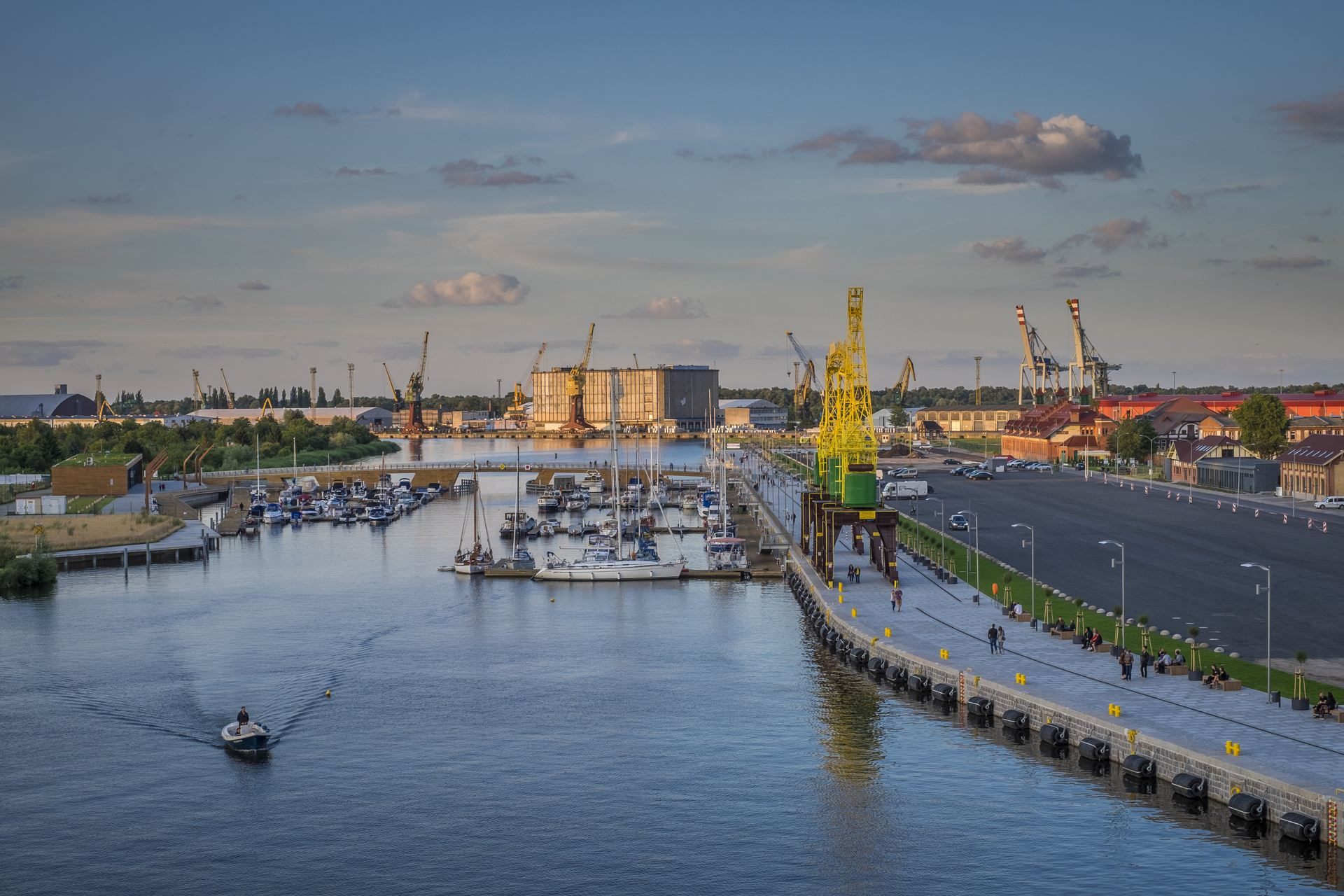
The terms are sometimes confused. Bank protection protects and stabilises the slope — its main task is to halt erosion. A quay is a hydrotechnical structure that additionally carries operational loads (mooring of vessels, transhipment, traffic) and usually takes the form of a vertical retaining structure. On many port investments one passes into the other — which is why the scope of works and design requirements must be settled at the very start.
Formalities — do you need a water-law consent
Works on the bank and in the water are in most cases use of waters or the construction of water structures, and that means a water-law consent is required. In practice you will usually need a water-law permit assessment and a water-law permit, and on smaller tasks — a water-law notification. The scope depends on the nature and scale of the works. Formal errors at this stage can halt the construction, so the documentation is best prepared in parallel with the technical design, not after the fact.
How to choose a durable solution
The cheapest protection is not the one with the lowest price per metre, but the one that will withstand the conditions of the given water body. A poorly chosen method — too weak for the loads or founded without regard to the ground-water conditions — will be undercut at the first larger high water, and then you pay twice.
That is why we base the choice of solution on a survey of the hydraulic and geotechnical conditions, and carry out the works with supervision of hydrotechnical operations. We combine design, formal documentation and execution at the land–water interface — from concept, through hydrotechnical construction, to supervision.
Frequently asked questions (FAQ)
How much does bank protection cost?
The cost depends on the method, the length of the stretch, access and the ground-water conditions. Riprap or gabions are cheaper than sheet piling, but the final price is always preceded by an analysis of the specific bank.
Do you need a permit for bank protection?
Most often yes — the works usually require a water-law consent (an assessment and a permit). The scope is determined individually.
Which solution is the most durable?
There is no single answer. Under heavy wave action and current, riprap and retaining structures work best; under gentle conditions, gabions or biological safeguards are enough.
Can protection be combined with building a quay?
Yes, and it is often done this way — then the key is to design both elements together with one, coherent scope of works.
Planning bank protection, a quay refurbishment or another hydrotechnical investment? We will analyse the conditions, choose the optimal method and run the matter from documentation to supervision. Ask for a quote.